A home does not need to look like nobody lives there to photograph well. It needs to feel cared for and easy to understand. Buyers should be able to see where they would sit, how they would move through a room, and what makes the space useful. Start with what you already own before you shop for anything new.
Clear space and thoughtful furniture placement usually come before more decor.
Clear the entry
Define each room
Simplify surfaces
Photograph & reset
Begin with the first view
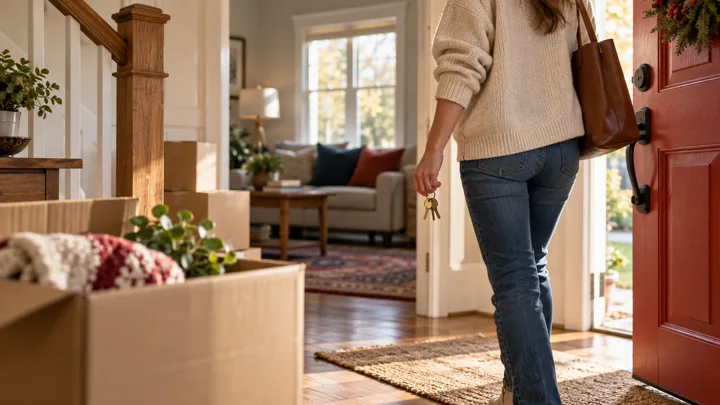
Walk through your front door as if you are visiting for the first time. Remove items that interrupt the path, clean glass, and make sure the entry is well lit. Outside, tidy the walkway and arrange the porch so the entrance is obvious. Keep the scale of accessories suited to the space.
Try the view from the sidewalk, the front step, and the entry. A hose across a path or a crowded coat rack can pull attention away from the home itself. Create a place for shoes, bags, and daily mail that you can reset quickly. If the entrance is small, one simple focal point is usually easier to read than several decorative pieces competing for attention.
Give each room a clear purpose
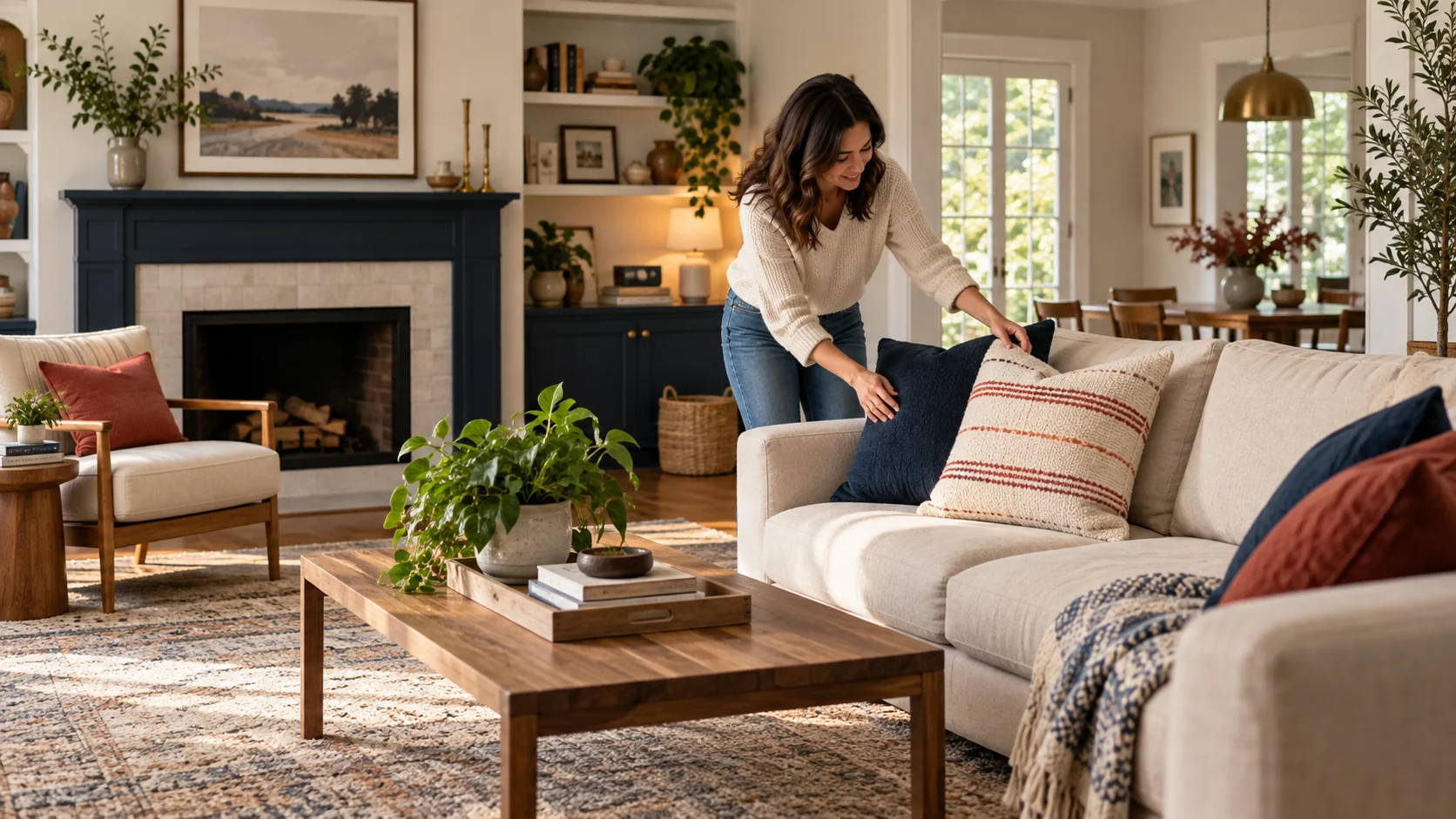
In living areas, arrange seating so movement feels natural. In a room doing several jobs, decide which use should be most visible in photos. Reduce extra furniture if it makes the floor plan difficult to read. Store loose cords and everyday supplies without blocking closets or hiding access to systems.
Photographs flatten space, so furniture that feels manageable in person can look crowded on screen. Give chairs and tables some breathing room where the layout permits it. Keep doors able to open fully. A spare room can still be an office and a guest room, but arrange it so the main use is obvious. Do not block useful architectural features just to create a staged vignette.
A small living-room reset
Before buying a new sofa, try removing one extra chair, moving a side table away from the walking path, and putting loose cords out of view. Open the appropriate window coverings and photograph the room from the doorway again. You may find that the room feels clearer without a major purchase. If it still looks awkward, ask for help with layout before adding accessories.
Simplify kitchens, baths, and bedrooms
Leave counters mostly clear and put away personal toiletries. Coordinate towels and bedding if you already have suitable pieces. Clean reflective surfaces and check that light bulbs work. Open window coverings where appropriate, and ask your photographer about lighting rather than buying extra fixtures solely for the shoot.
In the kitchen, put away the drying rack, excess small appliances, and items attached to the refrigerator. In baths, remove everyday bottles and check grout, mirrors, and fixtures for cleaning needs. In bedrooms, smooth the bedding and simplify bedside surfaces. Use a few coordinated colors already present in your home rather than buying a different decorative theme for every room.
Use the camera as a final check
Take quick phone photos from doorways and review what draws your eye. Small clutter becomes more noticeable in a still image. Correct distracting details, then create a short reset checklist for showings. Keep presentation honest: staging should clarify the property, not conceal defects or misrepresent a room’s dimensions.
Think about where the belongings will go during showings. A small basket for last-minute personal items can be more useful than a complicated styling routine. Keep valuables and private paperwork secured. Tell your photographer about rooms with challenging light or features you want clearly represented. The best preparation supports accurate, attractive photos and a showing experience that feels consistent with them.
Questions you may be asking
Do I need professional staging?
It depends on the home, whether it is occupied, the furniture available, and your budget. A consultation or a focused room plan may be enough; a vacant property can present different needs.
Should every personal item disappear?
Aim to reduce distraction and protect privacy. You do not need to erase all character. Keep the focus on the room’s space and features rather than collections, paperwork, or personal photographs.
Your next steps
- Clear paths and surfaces.
- Check every light and visible window.
- Make a ten-minute showing reset list.